




Built to Move: The Engineering Behind the Photon
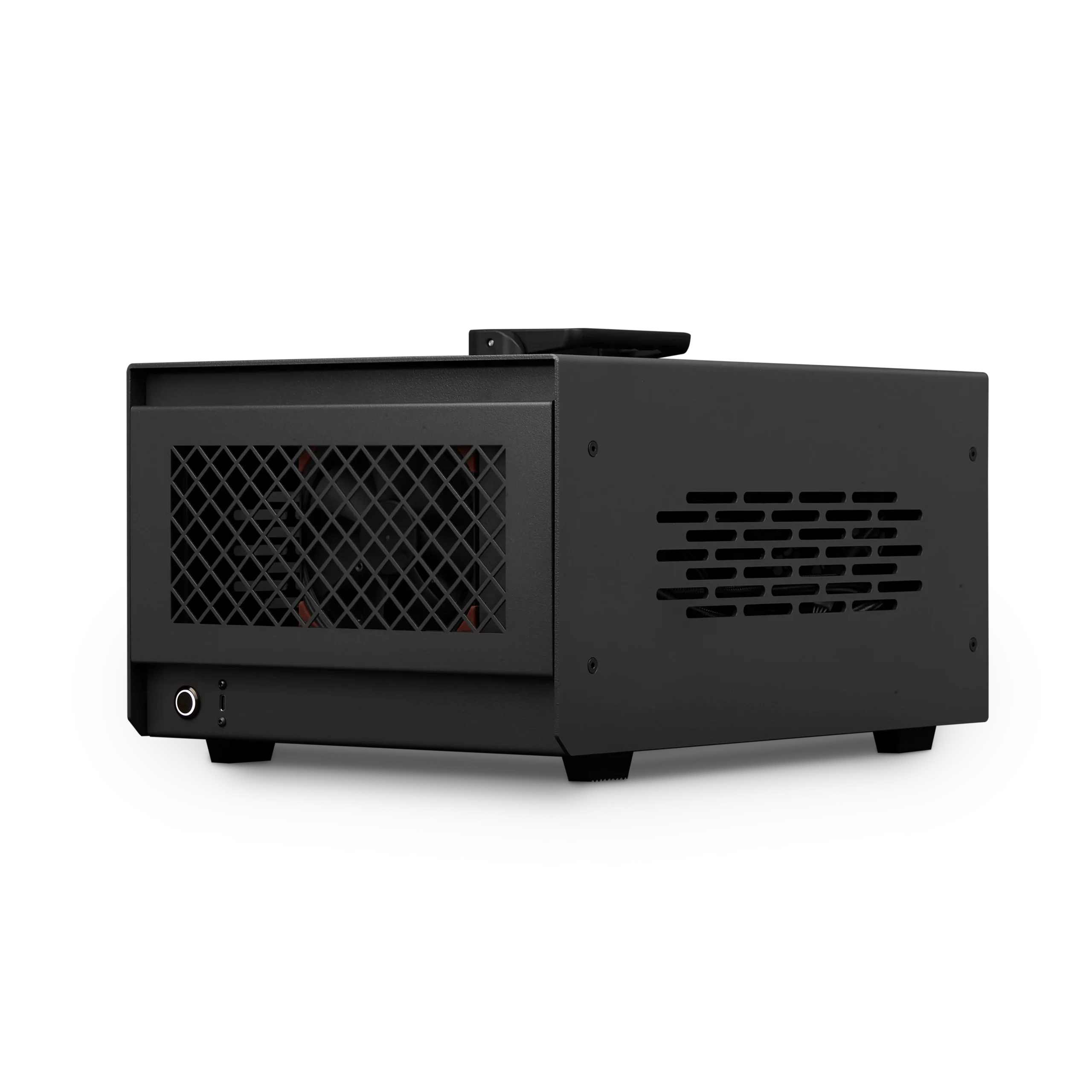
Most high-performance PCs are designed to sit on a desk and never leave it. The Photon wasn’t. Here’s how that one assumption changed everything about the way it’s built — and why.
When a powerful computer has to travel — flown to a shoot, driven to a venue, couriered between sites — it fails in ways a desktop machine never does. Not because the parts are weak, but because the machine was never designed for the forces that transport puts through it. We learned this the hard way over years of building machines that had to move, and the Photon is the answer we arrived at. Every major decision in its construction traces back to a specific failure mode we set out to remove.
This is the reasoning behind the build.
The problem nobody designs for: mass on a lever
The single most common way a travelling PC dies isn’t dramatic. There’s no leak, no spark. It’s a cracked CPU socket or a bent motherboard, and it’s caused by the cooler.
A large tower air cooler is anywhere from 600 grams to a kilo and a half of metal, and it hangs off four small mounting points on the CPU socket. On a desk that’s fine — it just sits there. But the moment the machine takes a knock in transit, that mass behaves like a lever. The heatsink’s own weight, multiplied by every bump and vibration, pries against the socket and flexes the board beneath it. Modern sockets, AMD’s AM5 included, sit on hundreds of delicate spring contacts. It doesn’t take much to damage them. The cooler survives the trip in perfect condition; the board underneath it doesn’t.
That realisation shaped the entire Photon.
Decision one: lay the motherboard flat, and let gravity do the work
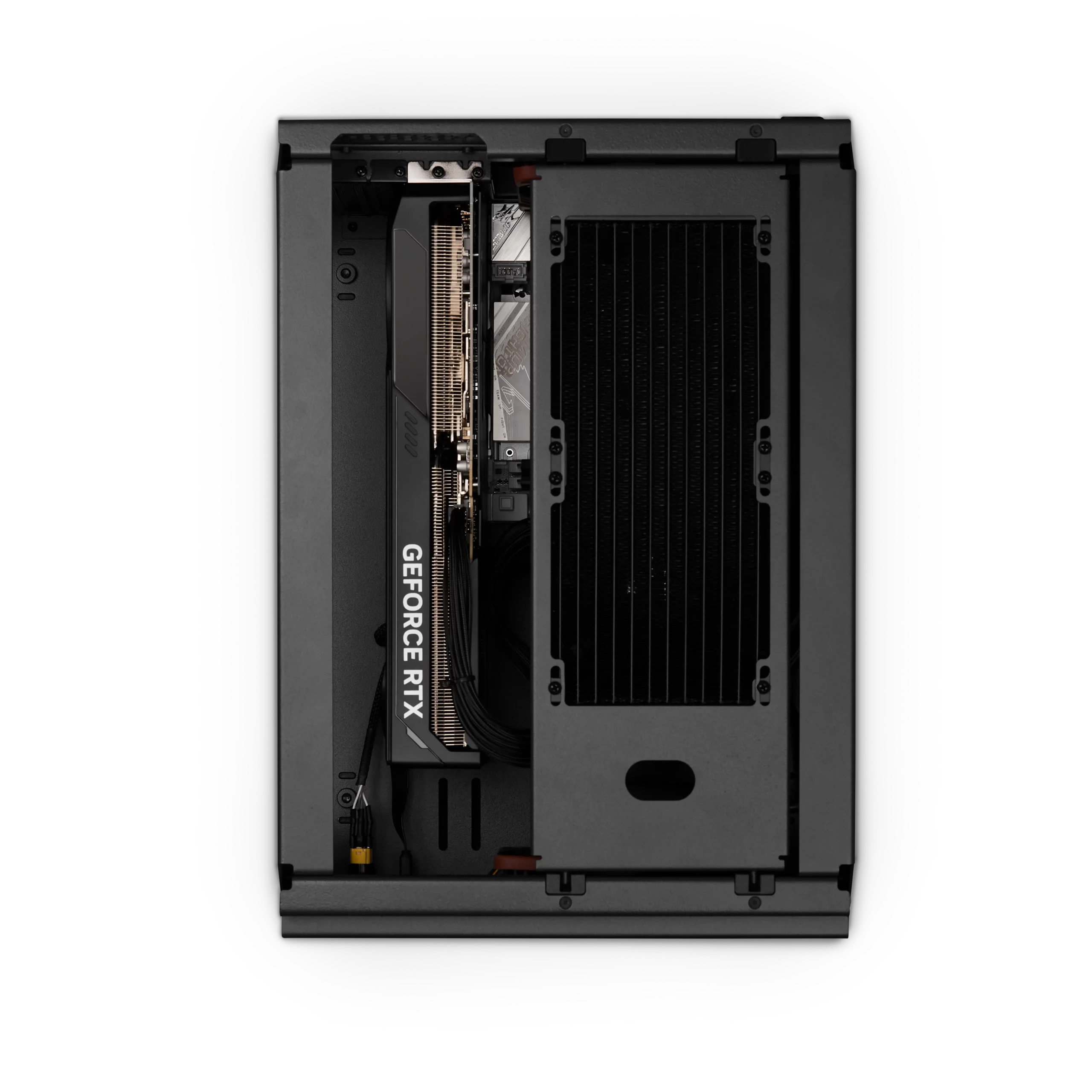
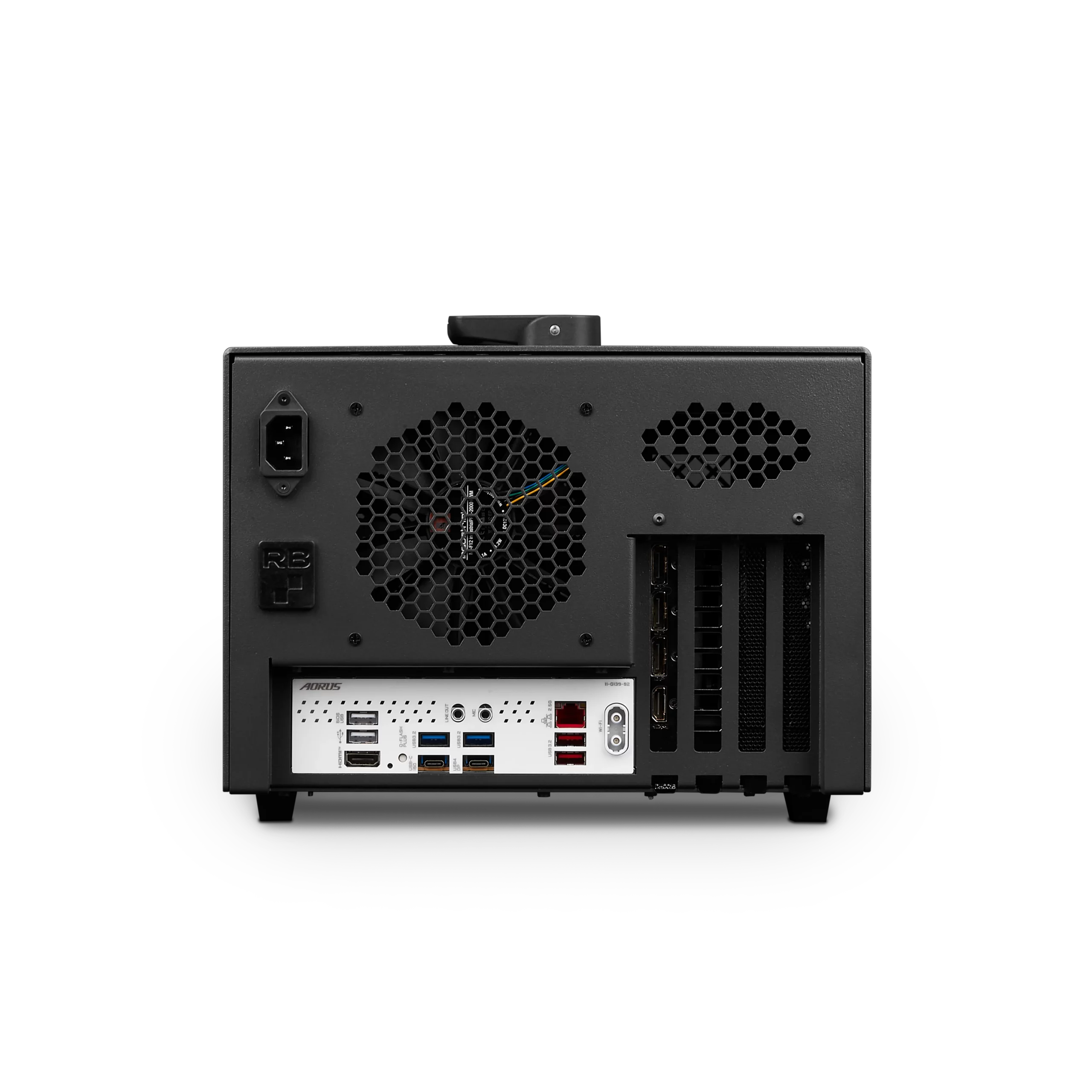
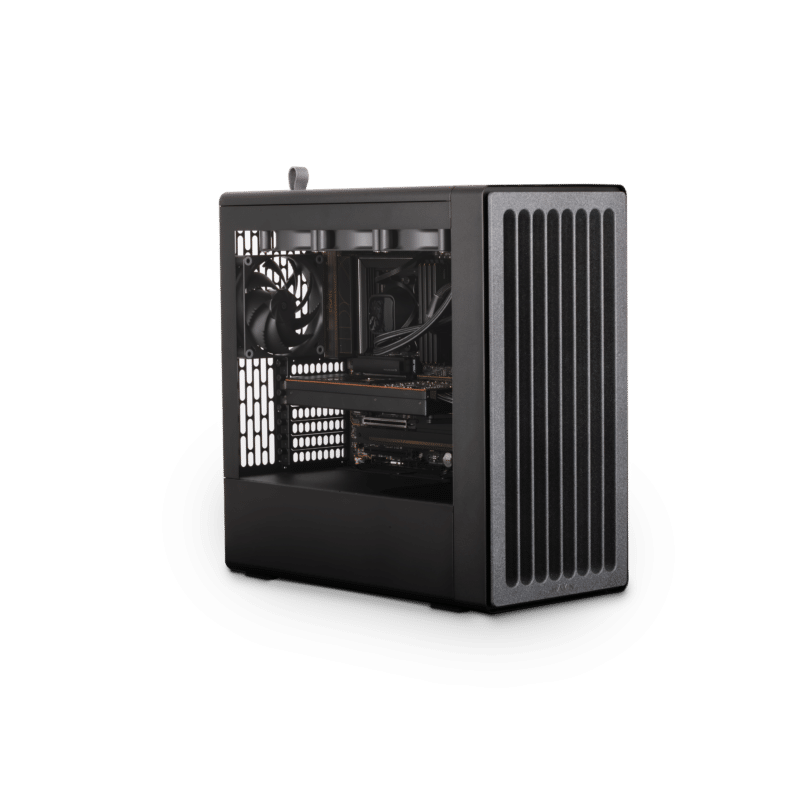
The Photon runs its motherboard horizontally rather than vertically. This one choice cascades into everything else.
For cooling, we use a sealed all-in-one liquid loop — and orientation is where most liquid-cooled machines quietly get it wrong. Every AIO contains a small, deliberate pocket of air, there so the coolant has room to expand as it heats. That air has to go somewhere, and the one place it must never end up is the pump. Air in the pump means noise, reduced cooling, and accelerated wear. The rule is simple: the radiator must always sit higher than the pump, so any air rises away and collects harmlessly in the radiator.
With the board flat, that rule is satisfied permanently and by design. The pump sits at its lowest possible point on the CPU. The radiator is held above it, locked rigidly into the chassis so it carries its own weight rather than hanging off anything. Nothing about tilting, setting down, or moving the machine changes that geometry — the air has nowhere to migrate. Where a vertically-built machine can shift its air pocket every time it’s laid on its side, the Photon’s loop stays in its correct state whether it’s upright, packed, or in transit.
And because the heavy component — the radiator — is fastened straight to the frame, there’s no mass left dangling off the socket at all. The lever problem simply doesn’t exist here.
Decision two: a graphics card that can’t sag
The other notorious transit-killer is the graphics card. A modern GPU is long, heavy, and — in a conventional build — supported at only one end, where it plugs into the board. Over time it sags under its own weight; in transit, that overhang becomes a second lever, stressing the slot and the card’s own PCB until something cracks.
The horizontal layout helps again: with the board flat, the card stands vertically off it rather than hanging sideways, so its weight no longer pulls against the slot the way it does in an upright case. On top of that, we brace it at both ends — a steel bracket anchoring one side and a custom 3D-printed tension bar holding the other. The card is captured, not cantilevered. There’s no free end left to flex, and nowhere for transit shock to concentrate.
Decision three: a chassis that absorbs the shock instead of passing it on
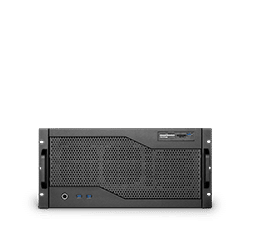
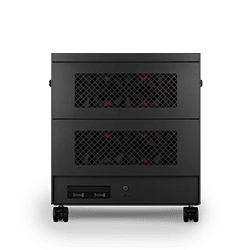
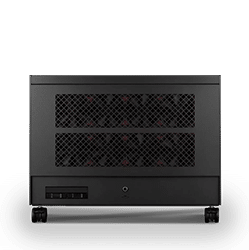
None of the above matters if the frame itself flexes. The Photon’s chassis is folded steel and aluminium sheet-metal construction, with pressed-in PEM fasteners rather than cheaper hardware that can work loose or strip under vibration.
Folded sheet metal gives you rigidity from geometry — the bends themselves resist twisting — and the pressed-in fastening system means the threaded points are part of the structure, not just screwed into thin panel. The result is a frame that takes the knocks of transport and stays square, so the carefully-managed loads on the cooler and GPU stay carefully managed. A rigid, properly-fastened shell is what lets every other decision hold up on the road.
The final layer: a case cut to fit
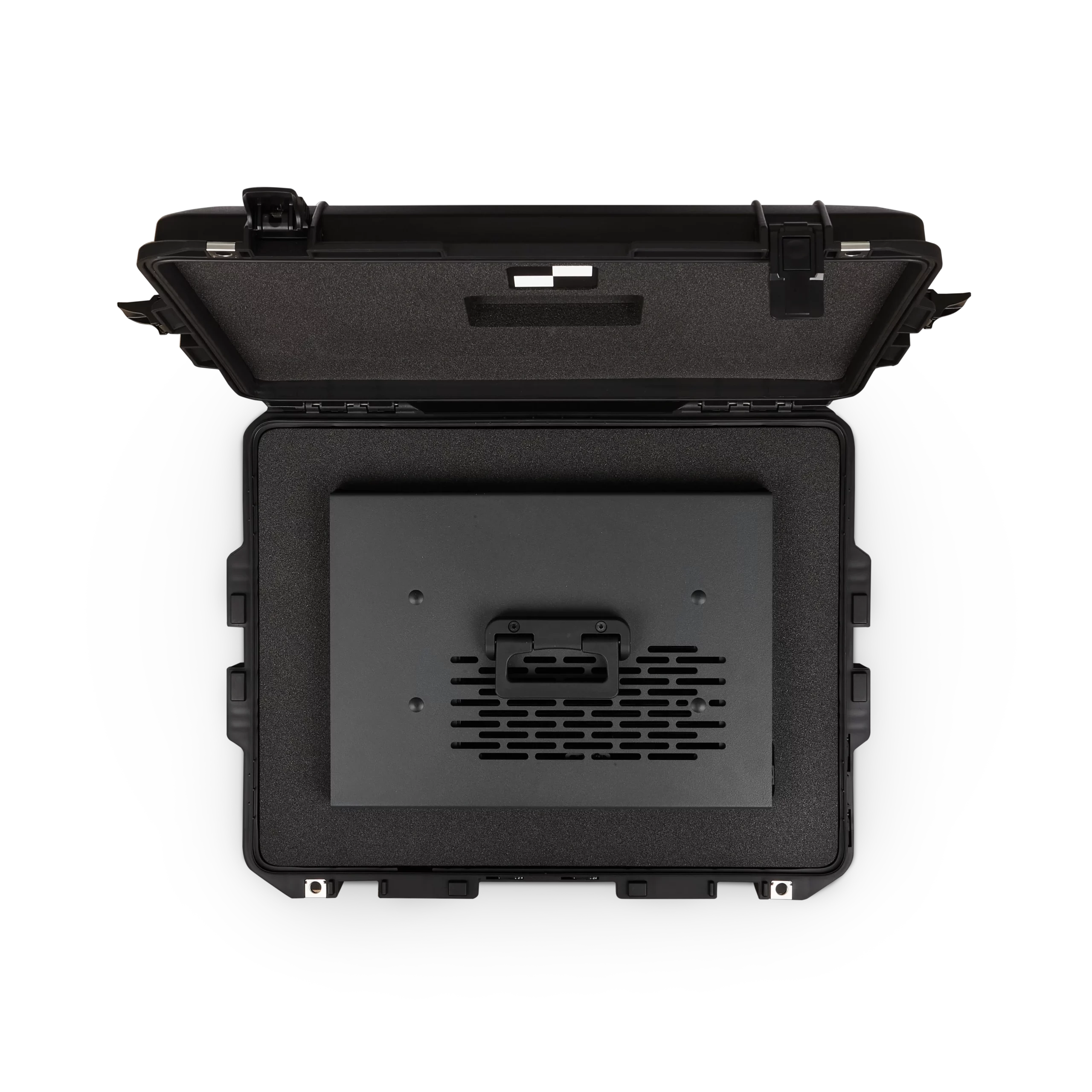
The Photon travels in a Peli 1607 Air case — but not with the foam it ships with. Ours is a custom CNC-machined foam housing that the machine drops into millimetre-perfect, cradled on every face with no room to shift, rattle, or concentrate load on any single point. This is the shock-isolation layer the entire design assumes. Rather than bolting the machine rigidly to wheels — which, as we learned, simply transmits every impact straight through — it’s suspended in dense, precisely-cut foam that absorbs the knocks before they ever reach the frame. A separate covered compartment holds cables, USB keys and accessories, so nothing loose is left rattling around against the machine in transit.
It’s the outermost expression of the same principle running through the whole build: decide where the forces go, and don’t leave it to chance.
The road we didn’t take: server coolers
It’s fair to ask why we didn’t just reach for industrial, server-grade cooling — the squat, screw-down heatsinks built for rackmount machines. On paper they’re exactly the kind of rugged, low-profile part that survives transport well, and we looked at them seriously, including the AM5 options.
Two things ruled them out for a machine like this. First, noise: these coolers are engineered for data centres where nobody’s listening, and under full load they run in the region of 65–70 dB — a constant whir that’s completely unacceptable in a studio, on set, or anywhere a person actually has to work next to the machine. Second, capacity: server AM5 coolers are typically rated to around 120–140 W, which is fine for a modest chip but nowhere near enough to feed the full-power 170 W CPUs the Photon is built around. They’d throttle the very performance the machine exists to deliver.
So the server route gave us ruggedness at the cost of the two things we won’t compromise — quiet operation and full performance. The Photon’s approach gets the ruggedness a different way, without paying either price.
A note on flying
Because these machines do fly, it’s worth putting one common worry to rest: cabin pressure. A pressurised cabin only takes the air pocket in a sealed loop through a small, gentle change, and the loop is designed with exactly that flexibility built in. It’s not the altitude that threatens a travelling machine — it’s the vibration and shock of handling. Which is precisely what the Photon’s whole design is built to absorb.
Why it’s built this way
Every choice here comes back to the same principle: remove the failure mode, don’t just hope to survive it. Lay the board flat so the pump and the air pocket can never fight each other. Fasten the heavy parts to the frame so nothing hangs off the socket. Capture the GPU at both ends so it can’t sag or flex. Build the shell rigid enough that the shock stops at the frame instead of reaching the components. And carry the whole thing suspended in foam cut to its exact shape, so the journey itself is absorbed before it ever reaches the machine.
A machine that never leaves a desk doesn’t need any of this. The Photon isn’t that machine — and everything about how it’s built says so.
Other Stories

Renderboxes named recommended hardware vendor for Disguise X1
July 14 2026
How do Renderboxes use AI in-house?
April 24 2026