







The Electron
Our most accessible
The one we didn’t build ourselves
Why the Electron is the only Renderboxes machine in an off-the-shelf chassis — and why that’s deliberate.
Three years ago, the Electron looked different
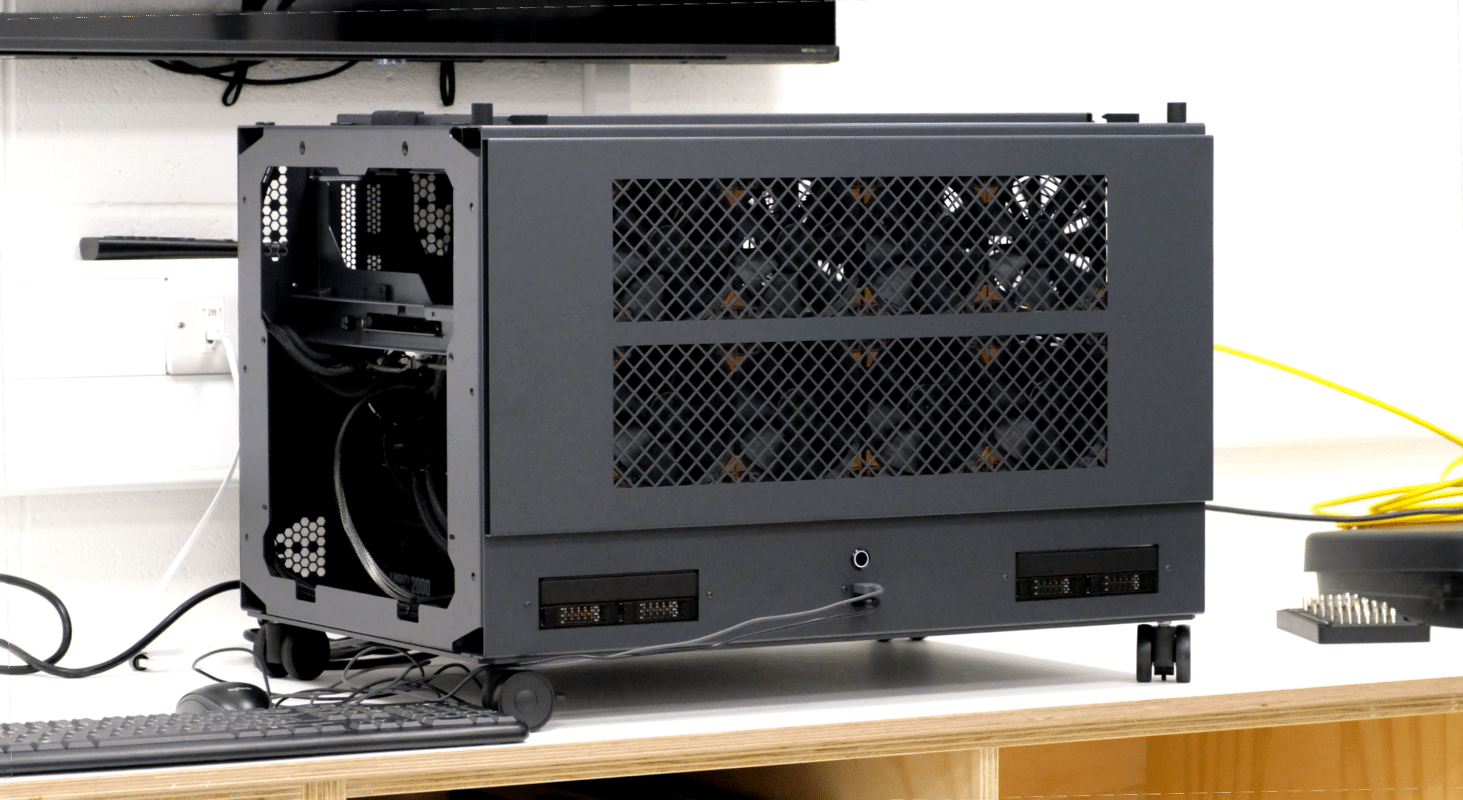
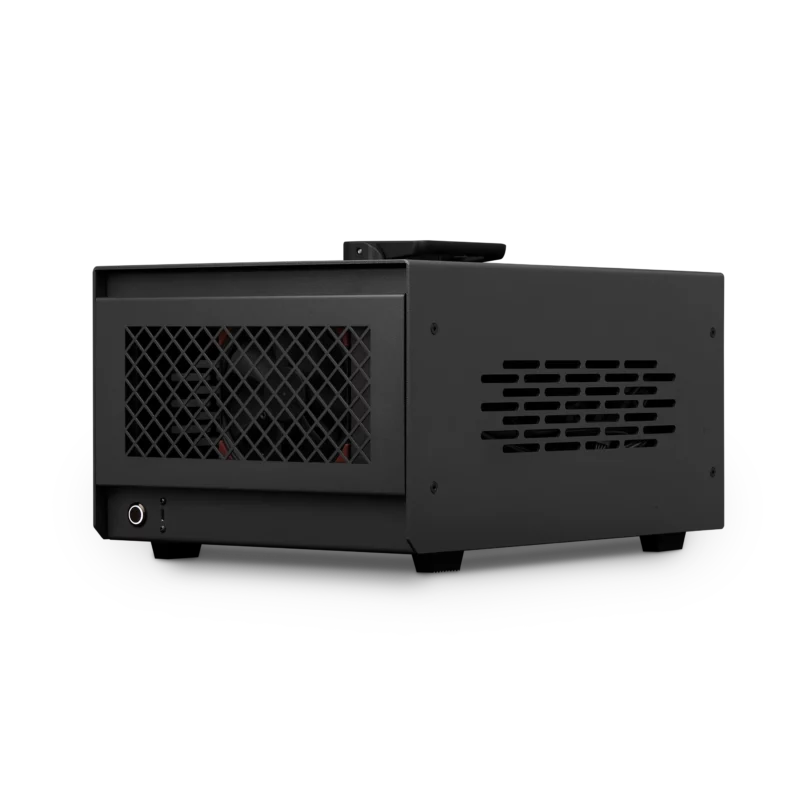
When we first launched the Electron, it lived inside our Atom chassis. Same industrial shell, same cable discipline, same thermal engineering as our Threadripper machines — just with a Ryzen or Core i9 motherboard inside it instead.
That wasn’t an accident. We wanted continuity. If you were buying a Renderboxes, you were buying a Renderboxes — the enclosure, the build quality, the look on the bench. The fact that the internals were consumer-class was a detail, not an aesthetic statement.
And it made sense, because there were good reasons a lot of our customers were asking for a Ryzen or i9 build in the first place. They didn’t need Threadripper’s 64-lane PCIe topology. They were running one GPU, not three. They weren’t loading a workstation with 512GB of ECC for Houdini sims. What they did want was the fastest single-core clock speed money could buy — which, then and now, comes from AMD and Intel’s consumer lines, not from Threadripper. And they wanted to spend less.
So for a few years, that’s what the Electron was: a Ryzen/i9 build in an Atom shell, for people who wanted a Renderboxes but didn’t need the full Threadripper payload. A few hundred of them went out the door in that form.
Then the numbers stopped working
Over the last eighteen months or so, two things happened in sequence. GPU prices went up. RAM prices went up harder — and they’re still going up, driven by AI infrastructure consuming enormous quantities of DDR5 (more on that in a separate post).
For our Threadripper and EPYC machines, that’s painful but it’s absorbable. Those are serious professional tools and the chassis is a small fraction of the overall cost. But for the Electron, the Atom chassis had always been a larger proportion of the ticket price. As the components inside got more expensive, the chassis became a harder cost to justify — not because it isn’t a beautifully engineered enclosure, but because the customers buying this particular machine were telling us, clearly and repeatedly, that they needed a keener price point. Sales of the Atom-chassis Electron were falling.
We had a choice. Hold the line and watch the Electron quietly die, or accept that this specific machine — not the others, this one — had outgrown its original chassis decision.
So we tested everything
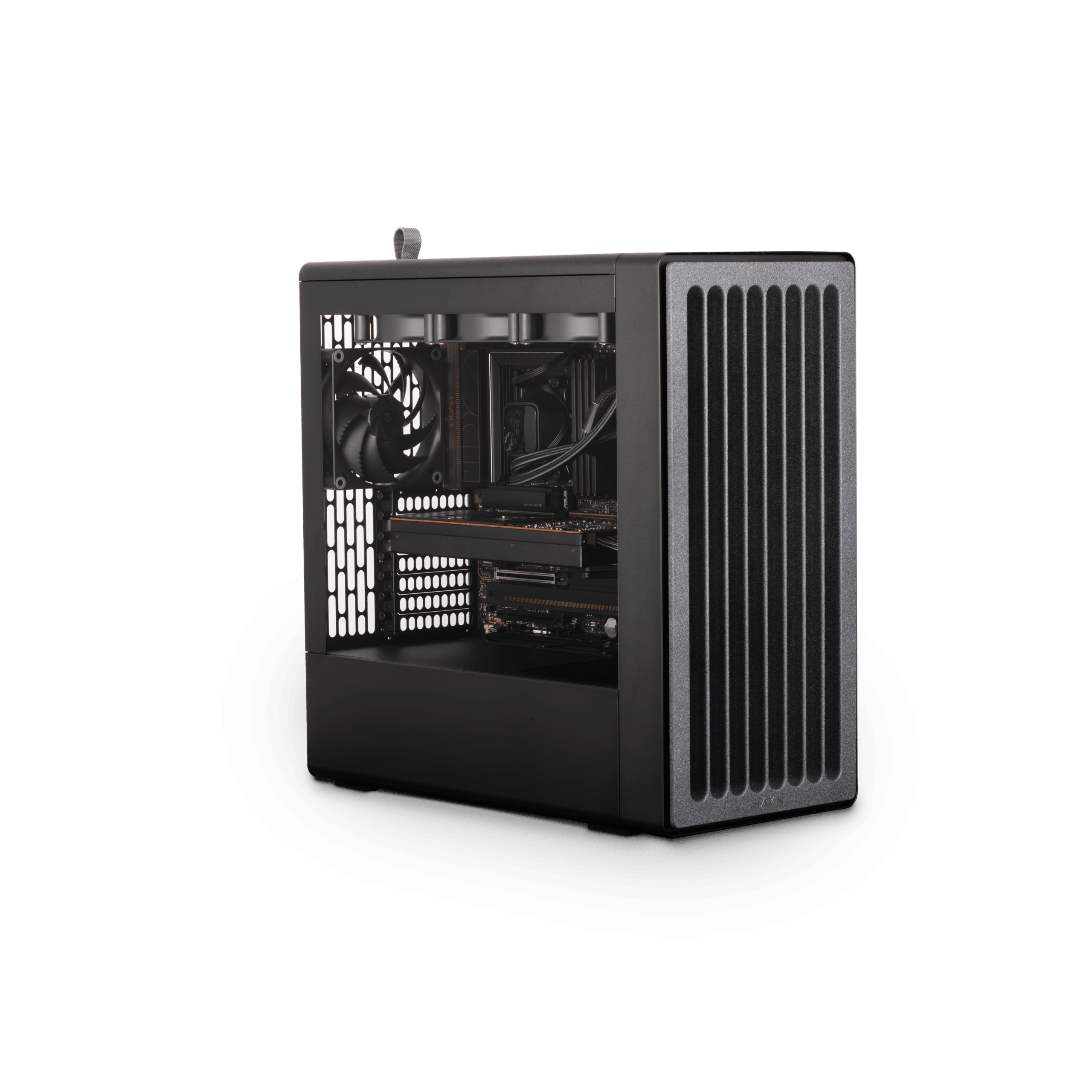
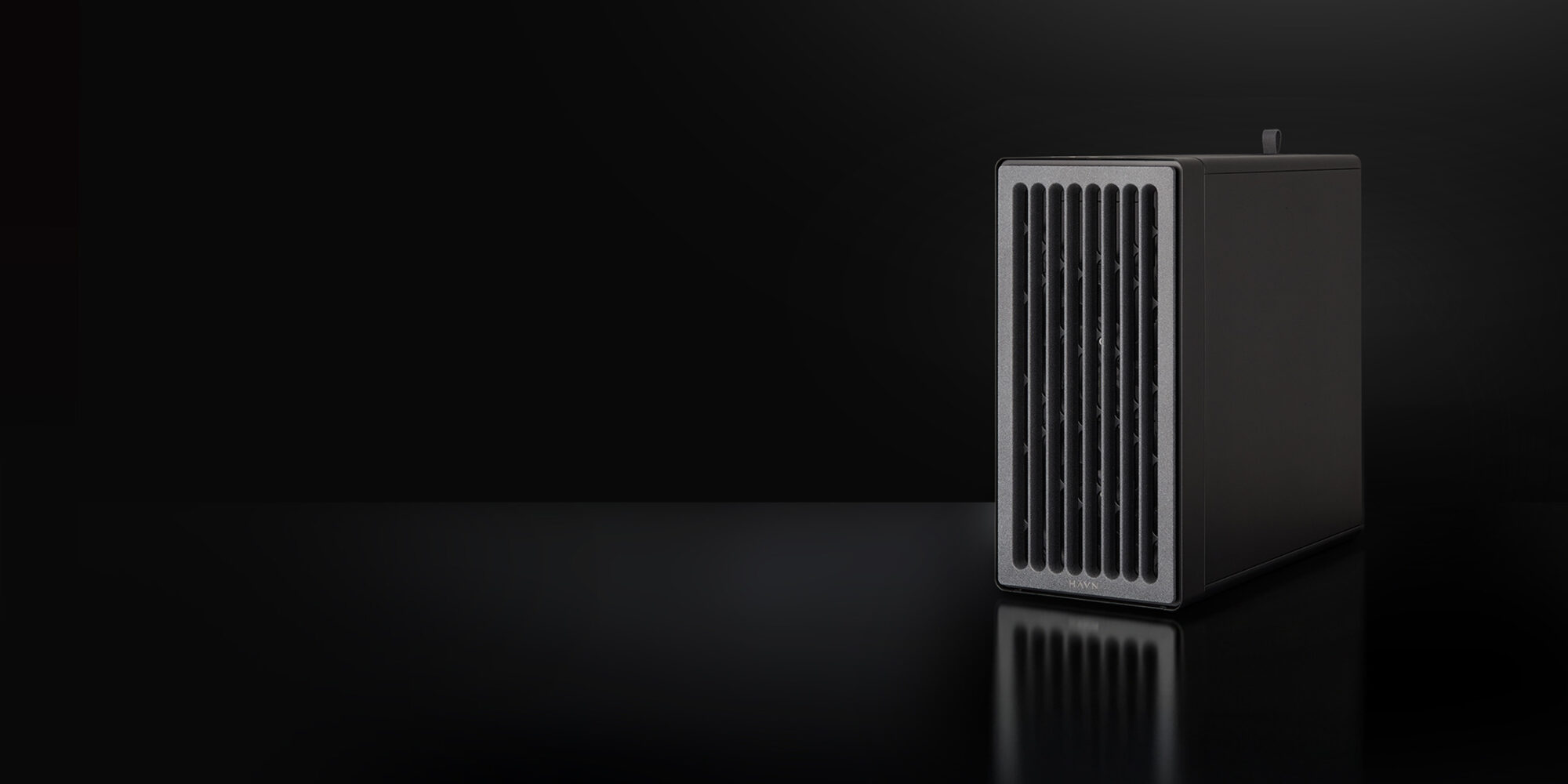
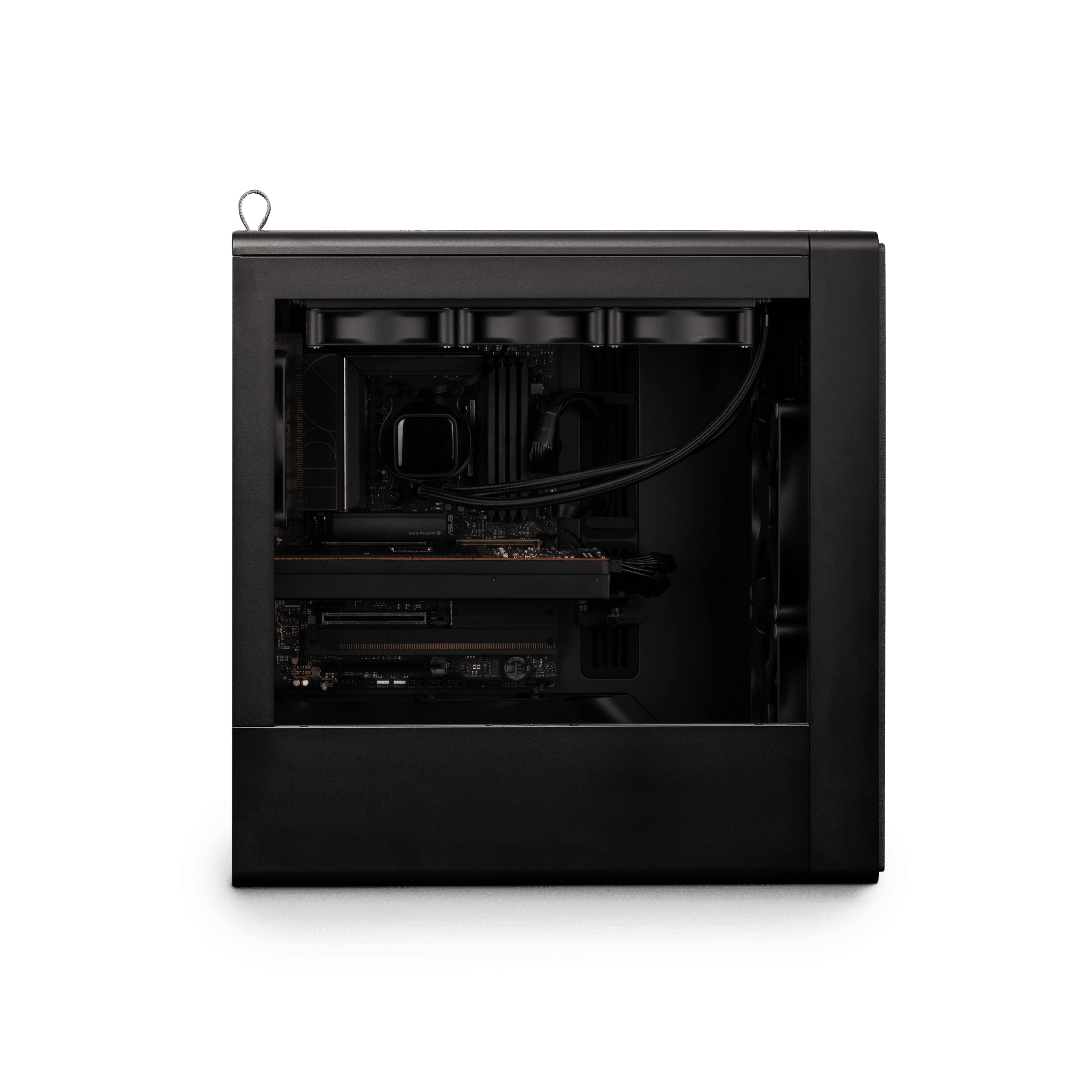
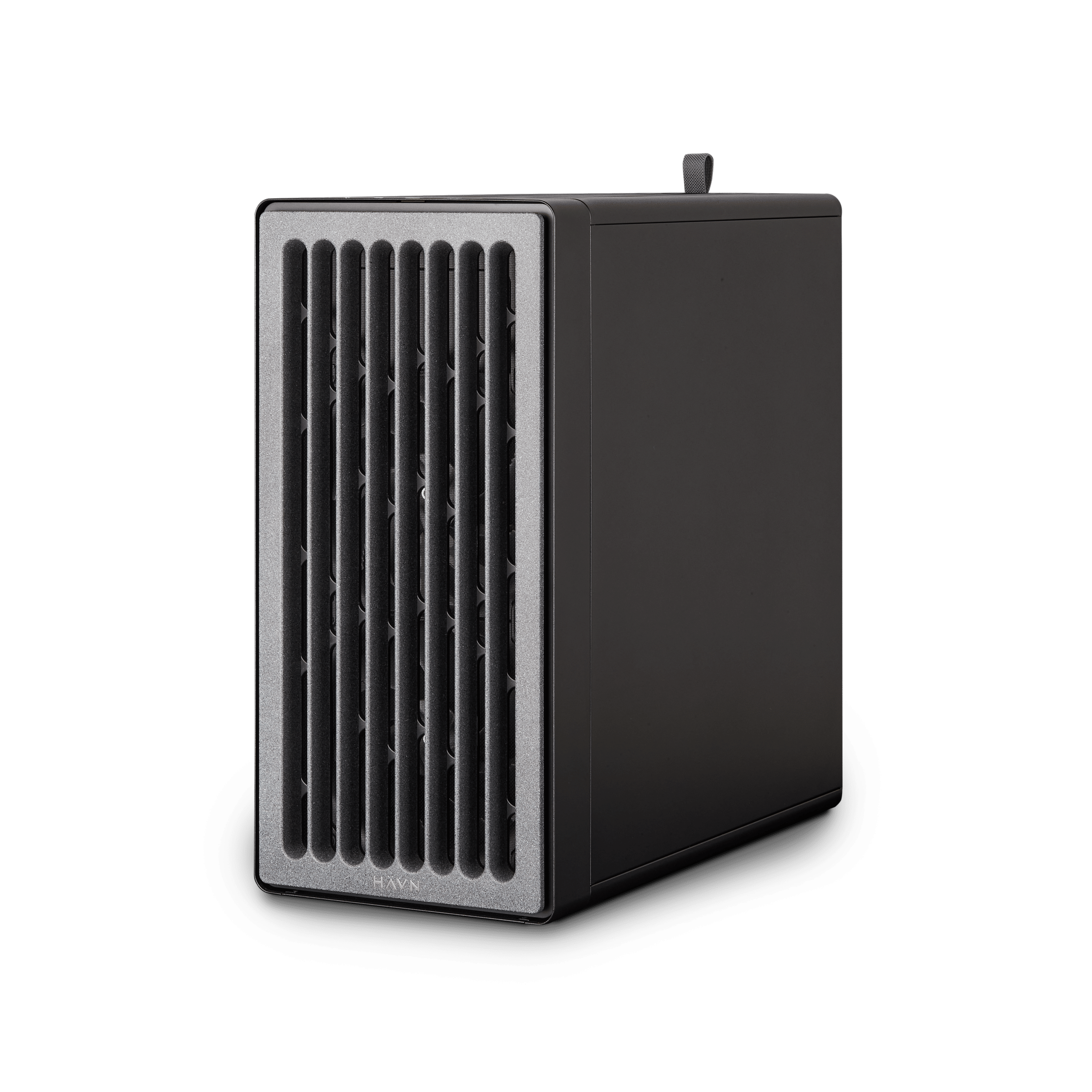
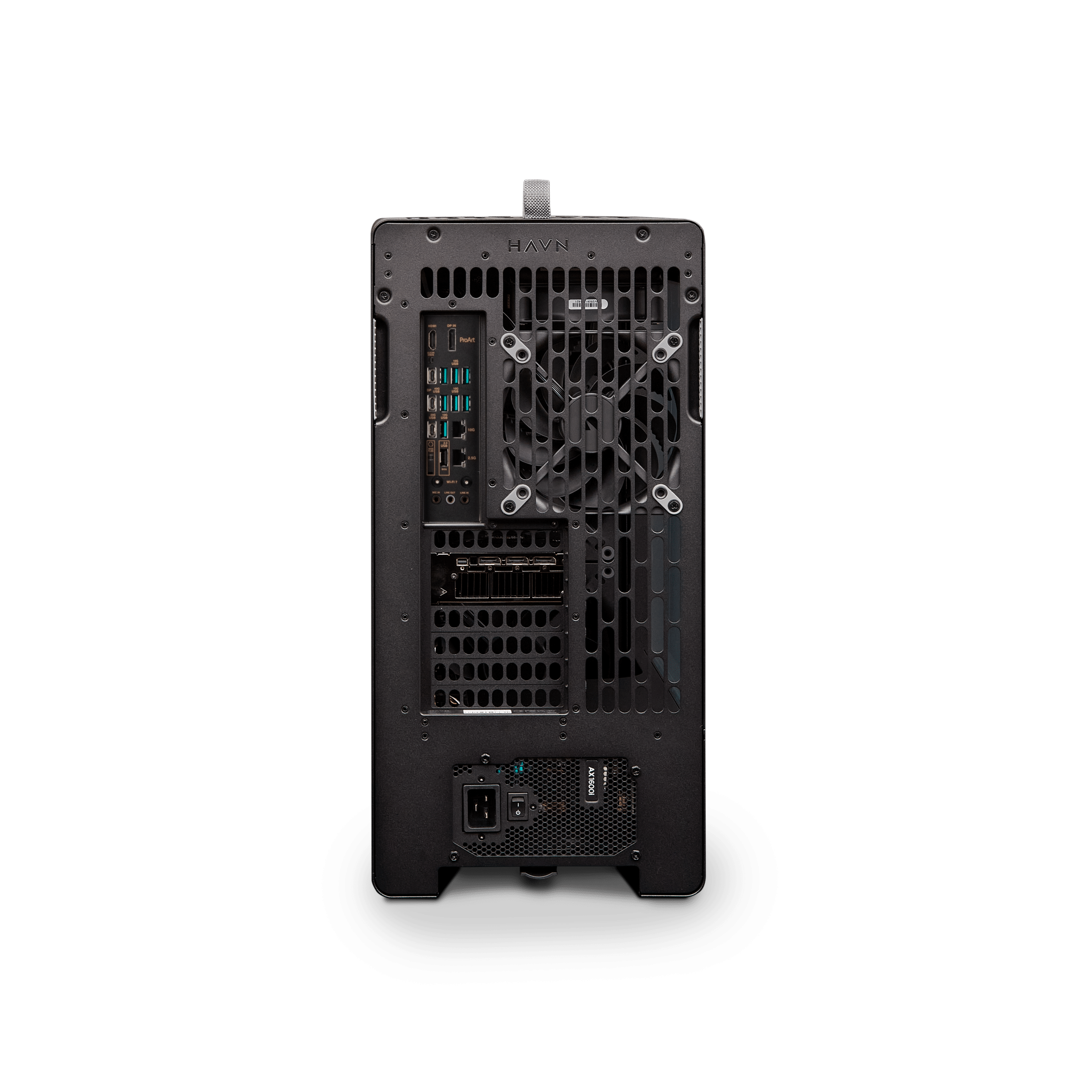
We brought in a handful of third-party chassis from all of the major brands you’d expect. I’m not going to list them. What I’ll say is that we stress-tested them on the bench the same way we stress-test finished builds — sustained thermal loads, real renders, real simulations, not synthetic benchmarks — and most of them were fine. One of them wasn’t just fine. The HAVN BF 360 was materially better than the rest: airflow, build quality, serviceability, acoustic behaviour under sustained load. It wasn’t close.
So that became the Electron’s new home.
What you gain
A lower entry point to a Renderboxes-built system. Hand-assembled, validated, stress-tested, warranty-backed — the build standards that apply to an Atom or a Molecule Air apply to an Electron too. That hasn’t moved.
The fastest single-core clock speeds on the market. At the time of writing, the top consumer parts — Intel’s Core Ultra 9 285K and AMD’s Ryzen 9 9950X3D — hold the single-thread crown. Not by a huge margin over Threadripper any more, but by enough that it matters in the workflows that care: single-threaded Maya evaluation, some After Effects work, audio, certain game-engine scenarios, anything where one thread is the bottleneck.
And, for the first time in the Renderboxes lineup, a tower. A proper glass-side-panel tower. That’s never been our house style and it won’t become our house style, but a significant slice of our customers genuinely want a machine that looks like what most people picture when they hear the word “workstation” Now there’s one.
What you trade away
I’d rather be upfront about this than have you find out later.
The Atom chassis is an engineered object in a way a third-party case, however good, isn’t. It’s built for serviceability, for upgrade headroom, for the specific thermal demands of a 96-core Threadripper Pro. You lose that. The Electron’s upgrade path is narrower. If you want to go from a Ryzen 9 to a 96-core workstation down the line, you won’t be doing it in this chassis. That’s what the Atom and Nano Pro are for.
You also lose the look. The Atom chassis is deliberately industrial; the BF 360 is deliberately consumer. Some of our customers prefer one, some the other. That’s why this is the Electron and not the Atom.
Who it’s for
Freelancers and small studios who want a properly built workstation without paying for capabilities they won’t use. Content creators whose workload is GPU-heavy but doesn’t need multi-GPU. Students — including the growing number of MA and PhD students doing serious GPU-compute work on their own kit — who need professional build quality at a realistic price. People getting into creative work where performance matters but budgets are finite.
If you need 128 PCIe lanes, eight-channel memory, or the ability to run three GPUs on full x16, you want an Atom or a Nano Pro. If you want the fastest single-threaded performance you can buy, in a machine we’ve built and validated, at a price that makes sense — that’s the Electron.
It’s the only machine in our lineup that isn’t in one of our own chassis. Everything else about it is still us.
[Configure your Renderboxes Electron and see the specs here]
NOTE: The Electron is fully compatible with our SUYR (Ship Us Your RAM) initiative.
The Electron Early 2026


Other Stories
Renderboxes named recommended hardware vendor for Disguise X1
July 14 2026